05 January 2026
The Commercial Maturation of Women's Sport: From Participation to Powerhouse
The End of the "Potential" Narrative
Looking back, 2025 was another terrific year for women's sport globally. It was a year where records weren't just broken; they were shattered. At This Sporting Planet, we had a front-row seat to this evolution, featuring the athletes, broadcasters, journalists, and business leaders who are redefining the landscape.
For decades, the industry discussed women's sport in the future tense—as something with "potential." In 2026, we must shift our language. We are no longer discussing potential; we are witnessing a commercial powerhouse in full flight.
The trajectory has been undeniable. While the 2023 FIFA World Cup provided the initial catalyst, the 2025 calendar consolidated that interest into record-breaking revenue. Elite women's sport revenue is projected to exceed $2.35 billion this year alone. The risk phase of investment has passed; we are now in the phase of rapid scaling.
The 2025 Data: A Year of Records
The numbers from the past twelve months tell a story of continued growth across broadcast, digital, and live attendance:
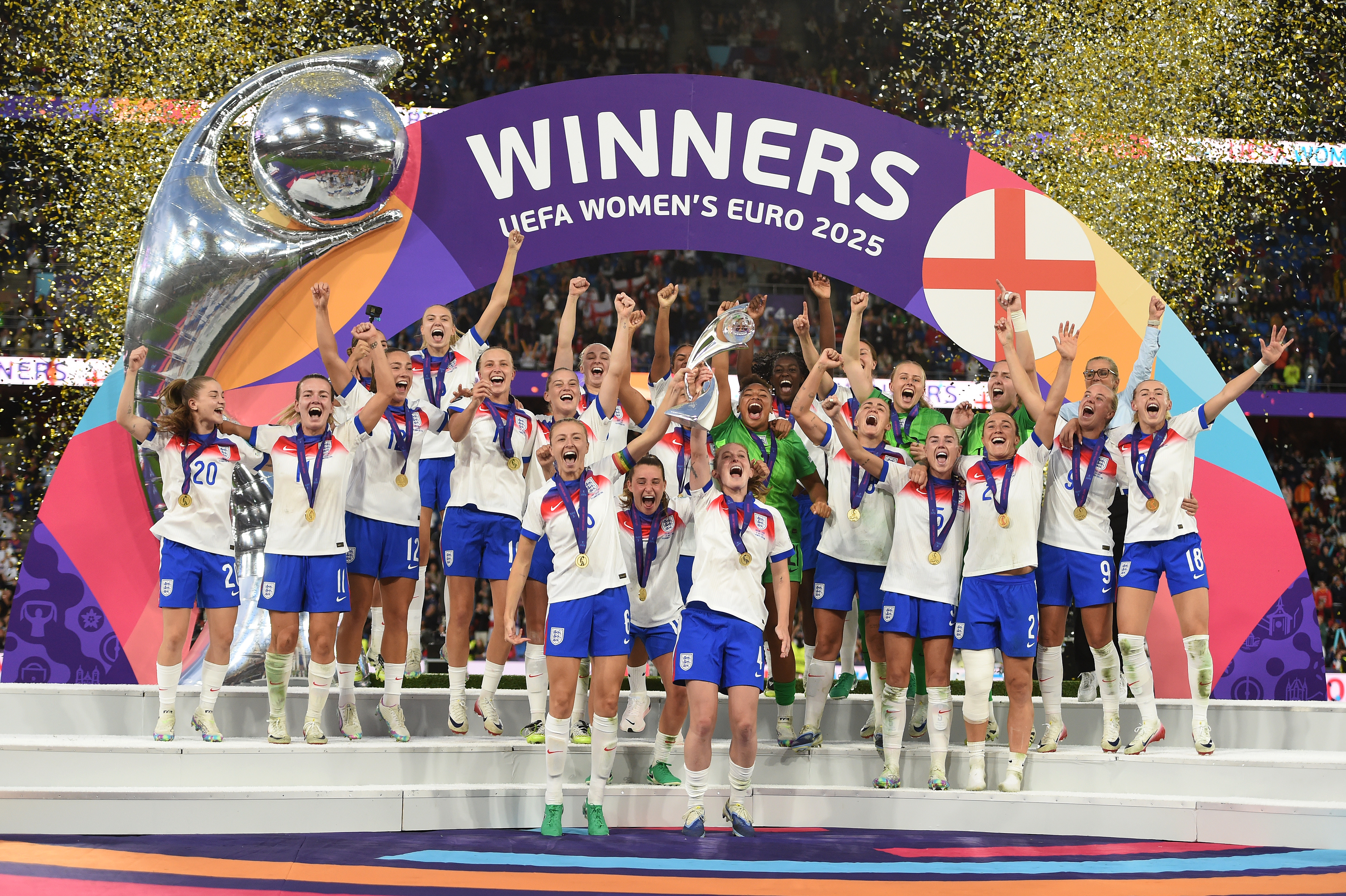
UEFA Women's Euro 2025: The tournament in Switzerland saw a 92% increase in digital engagement compared to 2022. The final between England and Spain drew a peak UK audience of 16.2 million.
ICC Women's Cricket World Cup 2025: India's victory over South Africa drew an unprecedented 185 million digital viewers on JioHotstar—matching the reach of the 2024 Men's T20 World Cup final.
Women's Rugby World Cup 2025: A watershed moment for the oval ball. The final at Allianz Stadium (Twickenham) set a new world record for women's rugby attendance with 81,885 fans. Globally, the tournament generated 1.1 billion social media impressions.
AIG Women's Open 2025: Beyond team sports, golf set new benchmarks. Digital growth was staggering, with a 144% year-on-year increase in YouTube views and a record 47,000 fans at Royal Porthcawl.
Elite Performance Driving Viewership
The primary driver of this growth is not charity; it is the undeniable quality of the product. As professionalisation has taken root, the technical standards, fitness, and skill of female athletes have skyrocketed, attracting a purist sports audience alongside new fans.
Speaking on our This Sporting Planet special, former England and Arsenal forward Lianne Sanderson highlighted this shift in quality:
"I don't think people are educated enough to know how good Barcelona are... They are the best for a reason. The way they ping the ball to each other, move in triangles, and play out from the back—they never panic."
This level of technical excellence is what fills stadiums. We are seeing clubs like Arsenal consistently sell out the Emirates Stadium on a standard matchday. The product sells itself.
A Shift in Media Narrative
With increased viewership comes a necessary maturation in media coverage. The days of "fluffy" profiles are being replaced by rigorous sporting critique—a sign of respect that the athletes themselves are demanding.
Caitlin Bassett, the legendary former Australian Netball captain, emphasised this evolution:
"If we keep treating females as fluffy and soft... that is not what you see on the netball court. Those girls are going hard. They want to be treated with respect, and part of that respect is treating them like any other athlete."
The "Lioness" Effect: Building a Lasting Legacy
This shift is directly linked to the "see it to be it" phenomenon. Just as the Lionesses' 2022 Euro victory altered the trajectory of football in the UK, the Red Roses' 2025 World Cup triumph is set to do the same for rugby.
Speaking to This Sporting Planet, Red Roses star and World Cup winner Abbie Ward emphasised that winning was only half the battle:
"We saw the amazing spectacle of the Lionesses winning the Euros... We want to create that same wave. As players, we are always striving to break those glass ceilings and pave the way—even if we won't see all the benefits ourselves, helping the next generation is so important."
Ward sees herself as a standard-bearer for a new era of professional motherhood in sport. Her story of juggling elite performance with raising her daughter, Hallie, is a powerful example of the 360-degree athlete that modern brands are eager to align with.
Global Expansion and New Icons
The emergence of Asian superstars is opening vast new markets. Shannon Tan, the Singaporean golfer and 2025 European Order of Merit winner, represents this new generation. Speaking to This Sporting Planet, she personified the professional mindset:
"When I won on my debut, I couldn't believe it... But once I got on the golf course, I knew I'd be fine. I've hit enough golf shots in practice; it's just another round of golf at the end of the day."
The Technology Opportunity: Delivering Direct to the Consumer
The commercial success of women's sport now relies on a sophisticated technology stack that moves far beyond traditional television. It is about using cloud-native distribution and IP-based streaming to deliver high-quality content directly to consumers, while simultaneously leveraging virtual production to monetise each region uniquely.
This isn't just about better pictures; it's about a more intelligent business model:
Integrated Digital Marketing:
By combining live broadcasts with real-time social media engagement, rights holders can keep fans inside their own digital ecosystem. This allows for direct data collection, turning anonymous viewers into known customers.
Virtual Board Replacement:
Instead of selling a single stadium perimeter board, virtual technology enables leagues to sell the same space multiple times. A fan watching in London sees a UK brand, while a viewer in Singapore sees a localised Asian sponsor. This unlocks revenue streams that were previously inaccessible.
Cloud & Streaming Efficiency:
Utilising cloud-based workflows allows producers and federations the ability to scale production up or down instantly without the need for massive on-site infrastructure. This reduces costs and allows for more games—and more niche sports—to be broadcast at a professional standard.
The business case for this shift is clear. Women influence 85% of all household consumer decisions, yet the audience for women's sport is younger and more digitally native than traditional fanbases. By using these technologies to deliver a personalised, multiscreen experience, brands and broadcasters aren't just reaching a demographic—they are engaging the most powerful purchasing group in the global economy.
Conclusion
At LCA, we remain dedicated advocates of women's sport, and we will continue to tell these amazing stories on This Sporting Planet, not because it is socially correct, but because it is commercially and editorially justified. The window of opportunity to invest at ground level is closing as valuations rise. Whether you are a broadcaster, a federation, or a brand, the time to embed your strategy is now. As the 2026 landscape shows, women's sport is no longer an up-and-coming field. It has arrived.
"If you would not ask that to a male athlete, do not ask it to a female athlete."
Caitlin Bassett, Former Australian Captain.